|
Birds & Birding >
Citizen Science
.
Our members are not only the heart of Audubon, but also its eyes and ears! We offer lots of opportunities for you to contribute to the scientific observations and conservation policy development that are at the core of our organization.

|
Audubon EagleWatch
In affiliation with the Audubon Center for Birds of Prey, Audubon EagleWatch began in 1992 in the Central Florida region, with only 22 volunteers. Today the program is statewide, with over 250 volunteers monitoring 265 nests. This represents over 20% of the nesting Bald Eagle population in Florida. These dedicated citizens are responsible for locating an average of six new nests each year, as well as rescuing injured eagles and eaglets after storms, and from development activities.
|
|
|
|

|
Project Colony Watch
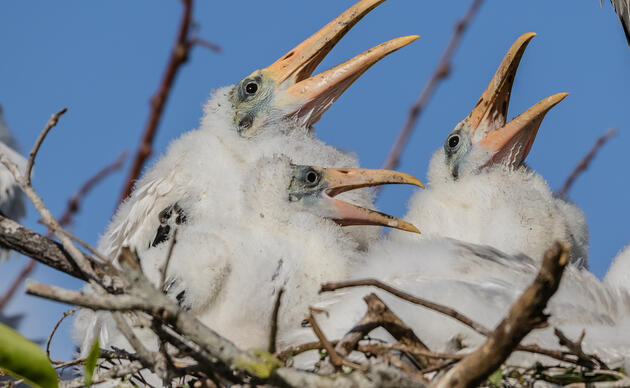
Project ColonyWatch uses volunteer bird-watchers to adopt and protect local waterbird colonies. By recruiting and training volunteers to become the local "wardens", biologists, and advocates for a nesting colony, we can increase the effectiveness of our colony protection efforts across Florida. If you would like to establish or get involved with a ColonyWatch project in your area, contact Ann Paul at 813/623-6826.
|
|
|
|

|
Roseate Spoonbill Band Re-Sightings
Like the canary in a coalmine, Roseate Spoonbills let us know that there is something drastically wrong with our environment. For this reason, spoonbills have been widely accepted as a key indicator species by which the health of Florida Bay and the greater Everglades landscape will be gauged. Audubon's Tavernier Science Center has begun a banding program to monitor the progress of spoonbills nesting throughout Florida. This program encourages birders to report sightings of banded Roseate Spoonbills.
|
|
|
|

|
Great Backyard Bird Count
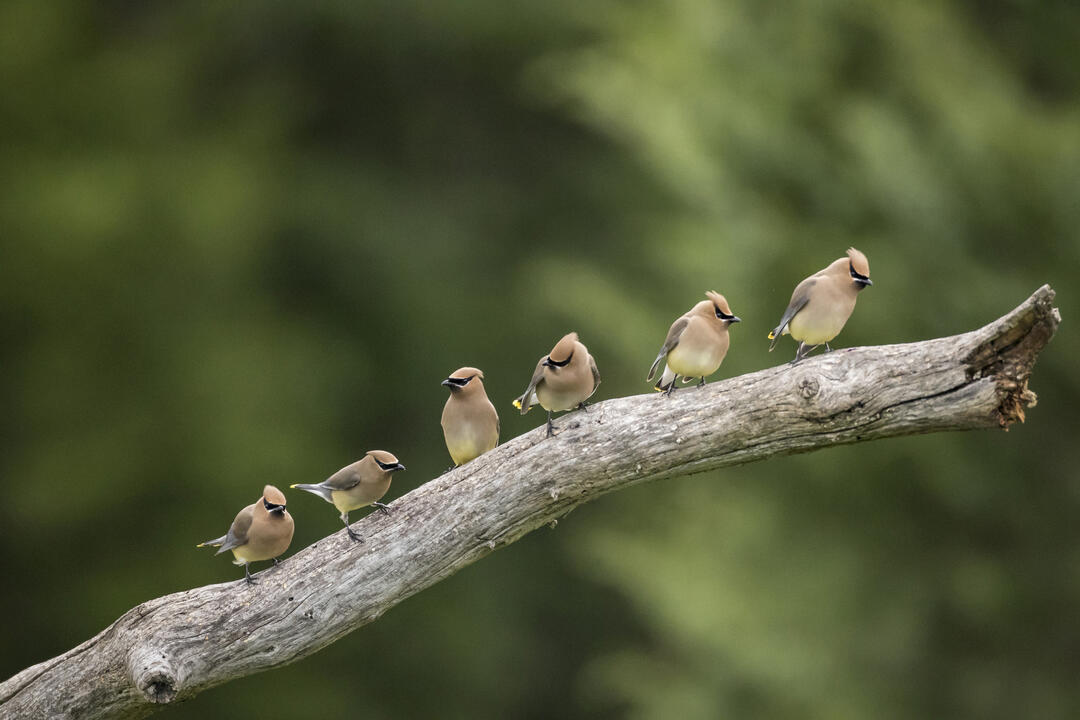
The GBBC is a joint project of the National Audubon Society and the Cornell Lab of Ornithology. The purpose of the GBBC is to track the abundance and distribution of North America's winter birds, as a means to ensure that common birds remain common, especially during a time when birds face many environmental hurdles.
|
|
|
|

|
Christmas Bird Count
The Christmas Bird Count is a long-standing program of the National Audubon Society. It is an early-winter bird census, where volunteers follow specified routes through a designated 15-mile (24-km) diameter circle, counting every bird they see or hear all day. It’s not just a species tally—all birds are counted all day, giving an indication of the total number of birds in the circle that day. All individual CBC’s are conducted in the period from 14 December to 5 January (inclusive dates) each season.
|
|
|
|
|
|
|
|