Saving Special Places >
Saving Special Places
Lake Okeechobee Sanctuaries
History of Audubon's Okeechobee Sanctuaries
Audubon's protection of Lake Okeechobee
and the nearby Kissimmee Prairie started in 1936 when Marvin
Chandler became the first, in a series of family members,
to patrol the vast area. A native of the region, Chandler
raised cattle on the Kissimmee Prairie following World War
I. He was deputized to enforce wildlife laws, and one of his
initial charges was to protect the 29,000 acres of Lake Okeechobee
designated as Audubon Sanctuaries by the State of Florida.
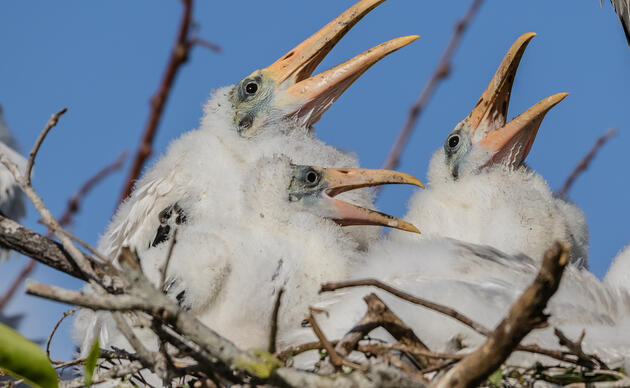
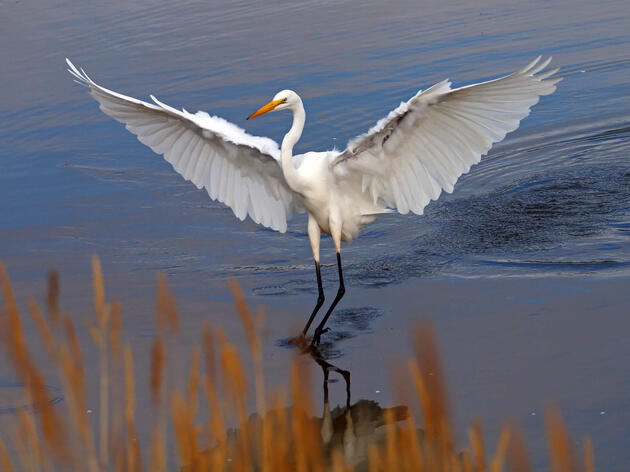
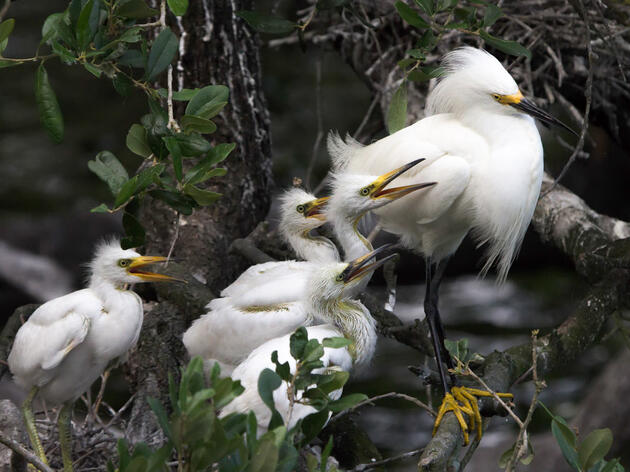
Chandler also protected wading bird colonies, with 24-hour
watches over critical rookeries during nesting season.
Marvin gained the cooperation of his neighbors
who saw his presence as a deterrent to rustlers and allowed
him to expand his preservation work to their lands. One of
his greatest challenges was foiling egg collectors, who sought
prized eggs from Florida specialty birds such as Audubon's
Crested Caracaras, Florida Sandhill Cranes, wading birds and
more. One of his early strategies was climbing Caracara nest
trees to stamp the eggs "Property of the National Audubon
Society" which apparently ruined their black market value
to the egg collectors!
Marvin's nephews succeeded him as wardens
and by the 1960s, a strong network of State Wildlife Officers
meant Audubon was no longer needed as main wildlife enforcement
presence. Audubon wardens counted and patrolled wading bird
colonies and conducted bird studies. At the time, the Everglades
Kite (now known as the Snail Kite) was already listed as "endangered."
Warden Rod Chandler noticed that Kite nests built in reeds
often blew down, so he began putting baskets under the nests,
increasing nest success immediately.
Today, Audubon is leading the fight for
clean water, exotic plant control, and proper water level
management to protect our Sanctuaries and the lake itself.
A large part of these efforts are directed at cleaning up
the Lake’s entire watershed, which extends to Orlando.
These problems have deep roots and only through long concerted
effort will they be corrected.
Lake Okeechobee Sanctuary
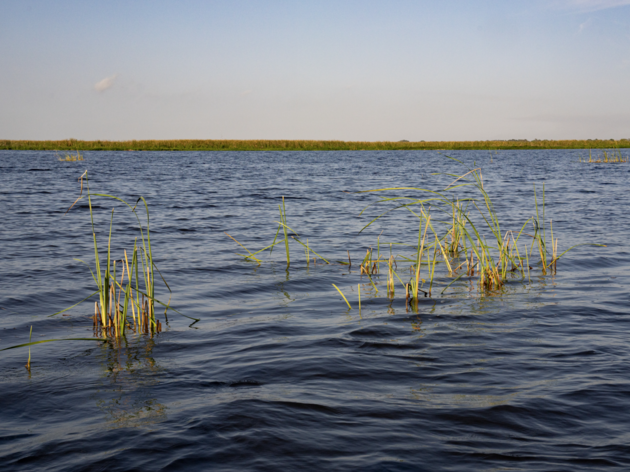
This sanctuary is one of Audubon’s hardest to visit—since
it literally occupies submerged parts of the lake! Lake Okeechobee,
although beleaguered, still has marvelous qualities and spectacular
wildlife resources. Snail Kites, wading birds, waterfowl,
Purple Gallinules, and myriad fish, frogs, snakes and turtles
rely on this sanctuary and few comparable remnants of wild
Florida remain.
Ordway-Whittell Kissimmee Prairie
Sanctuary
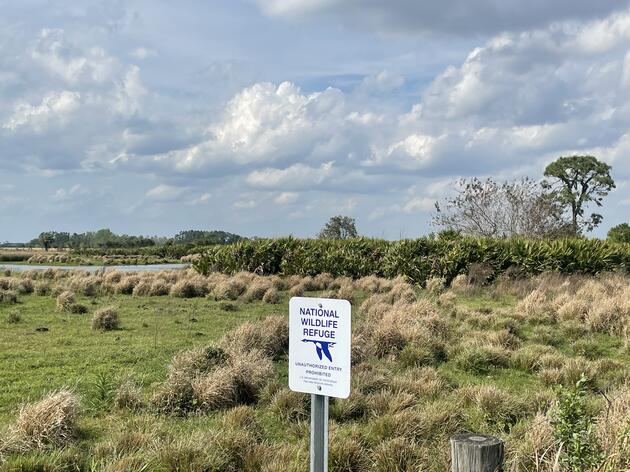
This Sanctuary protects Florida's endemic "dry prairie"
ecosystem. After World War II, the native prairies, which
originally covered perhaps 2.8 millions acres, were being
plowed under and replaced with citrus, row crops, or tame
grass pastures. By the 1970's, regional Audubon Warden Rod
Chandler told Audubon, "my family and I have been patrolling
Lake Okeechobee and these prairies for many years trying to
protect the birds. Now the prairies themselves are being destroyed.
If anyone is going to save prairies, maybe Audubon should."
His advice was heeded and in 1980, the Ordway-Whittell Kissimmee
Prairie Sanctuary was purchased in Okeechobee County. This
Sanctuary covered 7,315 acres of some of Florida's most pristine
remaining habitat.
Dry prairies occupy very flat areas and
are one of the most diverse plant communities in North America.
The prairies of central Florida host a unique suite of birds
that includes the Florida Sandhill Crane, Audubon's Crested
Caracara, Burrowing Owl, Mottled Duck, and Florida Grasshopper
Sparrow. The extensive wetland complexes host a variety of
wading and water birds, and the Sanctuary's population of
breeding Florida Grasshopper Sparrows was one of 6 known in
the world.
When Audubon learned in 1995 that a huge
ranch adjacent to the Kissimmee Prairie Sanctuary might be
available for sale, Audubon spearheaded a campaign to get
it bought by the State. Once again, with the able help of
The Nature Conservancy, the adjacent ranch is now the 50,000
acre (20,000 ha) Kissimmee Prairie Preserve State Park. Rod
Chandler had written in the 1970s that buying this tract would
be great and he lived to see his dream of getting the largest
remaining contiguous tract of Florida's Dry Prairie ecosystem
conserved.
With the larger prairie system conserved,
Audubon sold the Sanctuary to the State in 2001 to incorporate
into the State Park. The Florida Park Service now manages
more than 55,000 acres of the Kissimmee Prairie as "the
Real Florida." The proceeds from the Sanctuary sale have
been placed in a permanent endowment fund whose annual proceeds
are used to fund both, Audubon activities in the region, and
Park Service activities on the prairie.
The Kissimmee
Prairie Preserve State Park is located in northwest Okeechobee
County, Florida, about 25 miles north of Lake Okeechobee,
on the east side of the Kissimmee
River. The Park Service operates a campground and other
activities. Management consists of prescribed burns, exotic
species control, and a series of wetland restoration projects.
For a more detailed history of these programs,
click here. |